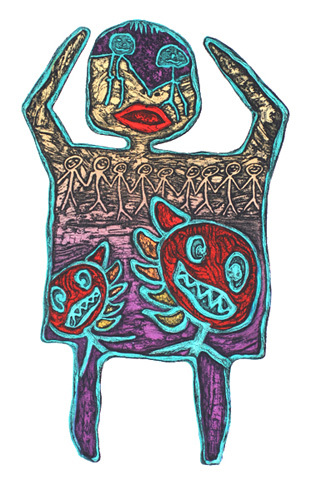
"Family Album Hieroglyphics: Man, Full With His Memories". © 1990. Linda C Everson. All Rights Reserved. Intaglio Print.
A symbiosis of two art forms was the basis for the “Family Album Hieroglyphic” series – my children’s “stick figures” and my photographs. When my children were young, our family took many trips in Colorado and Utah. We hiked through the canyon lands and visited many unusual rock formations, cliff dwellings, pueblos, petroglyphs and pictographs.
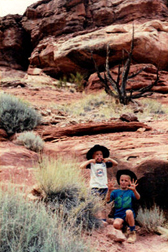
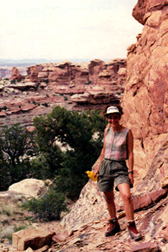
At the time, there was a direct relationship between the primitive “stick figures” my children had drawn and the petroglyphs and western landscapes I was photographing. I combined the two art forms and exposed them on to zinc plates which I etched, inked, and printed on paper on an etching press. That was the creation of this intaglio print series “Family Album Hieroglyphics”.
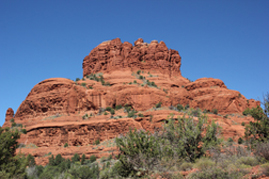
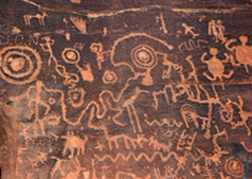
The intense emotions evoked in my children’s “stick figures” validated many family and cultural issues that are commonplace to everyone. Fears, friendship, loneliness, ethnic and gender issues, strife, pets, holidays, sports, and celestial configurations were captured in their simple, yet complex renderings. By combining my children’s primitive “stick figures” and my photographic backgrounds, I created art images that tell multiple stories with a sense of depth and compassion. The “Family Album Hieroglyphic” intaglio prints ALL tell stories and recollect emotions that we can relate to.
“Man, Full With His Memories” brings back recollections of both friends and foe, happiness and hostility. A faceless tree-like figure is imprisoned by hand holding pairs of smiling figures in “Mr. Lonetree Stands Alone”. This print depicts alienation, loneliness, and the need for relationships. “Women, They’re All the Same…” is a common, but inaccurate statement. Although a satirical art piece, my child’s rendition of women’s hairdo’s is humorous. Are women really so robotic in nature? “Jack Be Nimble…” is spoof on the well known rhyme and Halloween spooks. “Indian Memories” is as haunting as Edward Munch’s “The Scream”, which is one of my favorite works of art and depicts intense human emotion. “Man’s Best Friend, Or Is It?” tells about our preoccupation with our favorite pet, the dog.
I’m fascinated with many other primitive art forms and enchanted by the symbolism and story telling involved. I’ve visited many “prehistoric” or Upper Paleolithic caves such as Lascaux in France and Cueva de la Pileta in Spain. The stories about the discovery of these caves is remarkable too! In Lascaux, the sophistication of the so called “prehistoric artists” is exemplified by the overlapping of animals, use of perspective, and blending of colors. Egyptian hieroglyphics in later centuries was a formal pictorial writing system that also influenced my art.
Stories We Tell is a common theme in artwork throughout the ages!
]]>I was in Egypt a few years [...]]]>
I was in Egypt a few years ago and visited the Egyptian Museum, the pyramids, and other famous sites of anquities that are so valuable. One can only hope that Egypt, it’s people, and its famous sites will not be harmed too badly.
All eyes are on Egypt these days and although it is difficult, journalists are recording the events as they unfold. They hopefully have all-seeing eyes.
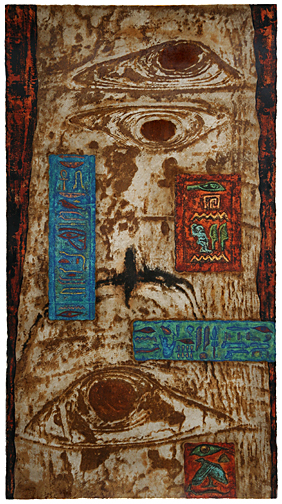
Arbor-Hieroglyph: The Third Eye I. © 2007, Linda C. Everson
This reminds me of the many eye hieroglyphics that I saw so often while there. I use aspen tree eye images in many of my Arborglyph monoprints, and recently began a new series which included tree eyes, hieroglyphics and of course The Eye of Horus, which is said to have protective and healing powers. Let’s hope that during these protests in Egypt, there will be a protective eye over everyone there.
Detail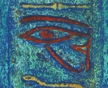
Acre sculptures and laundry
Acre more sculpture
Old Jaffa van and vines
Acre bread [...]]]>
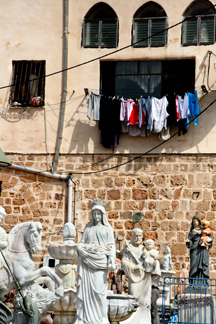
Acre sculptures and laundry
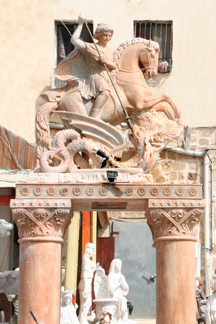
Acre more sculpture
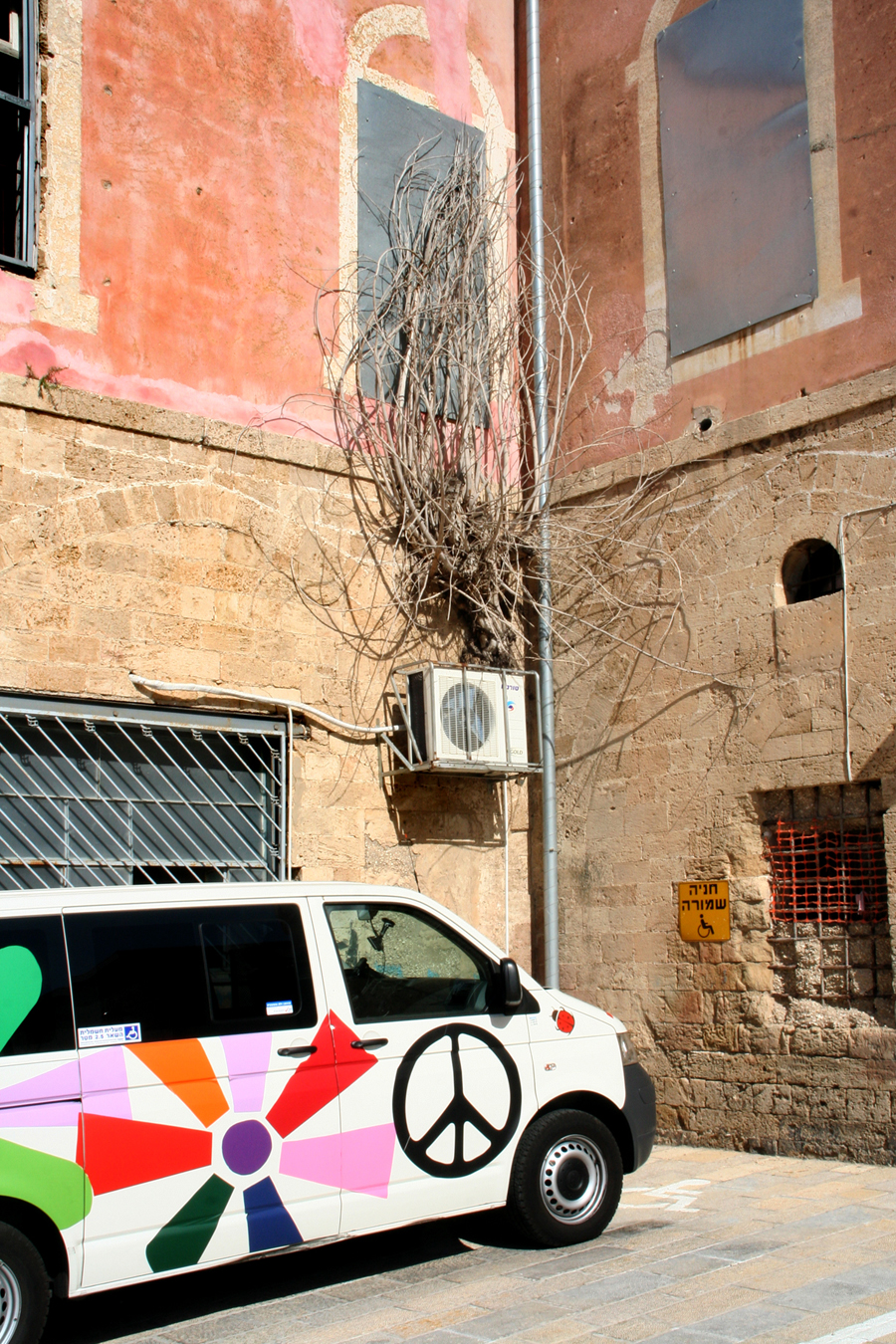
Old Jaffa van and vines
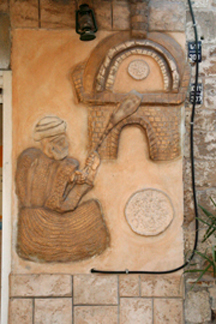
Acre bread oven
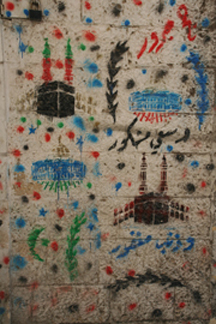
Old Jerusaleum art on wall
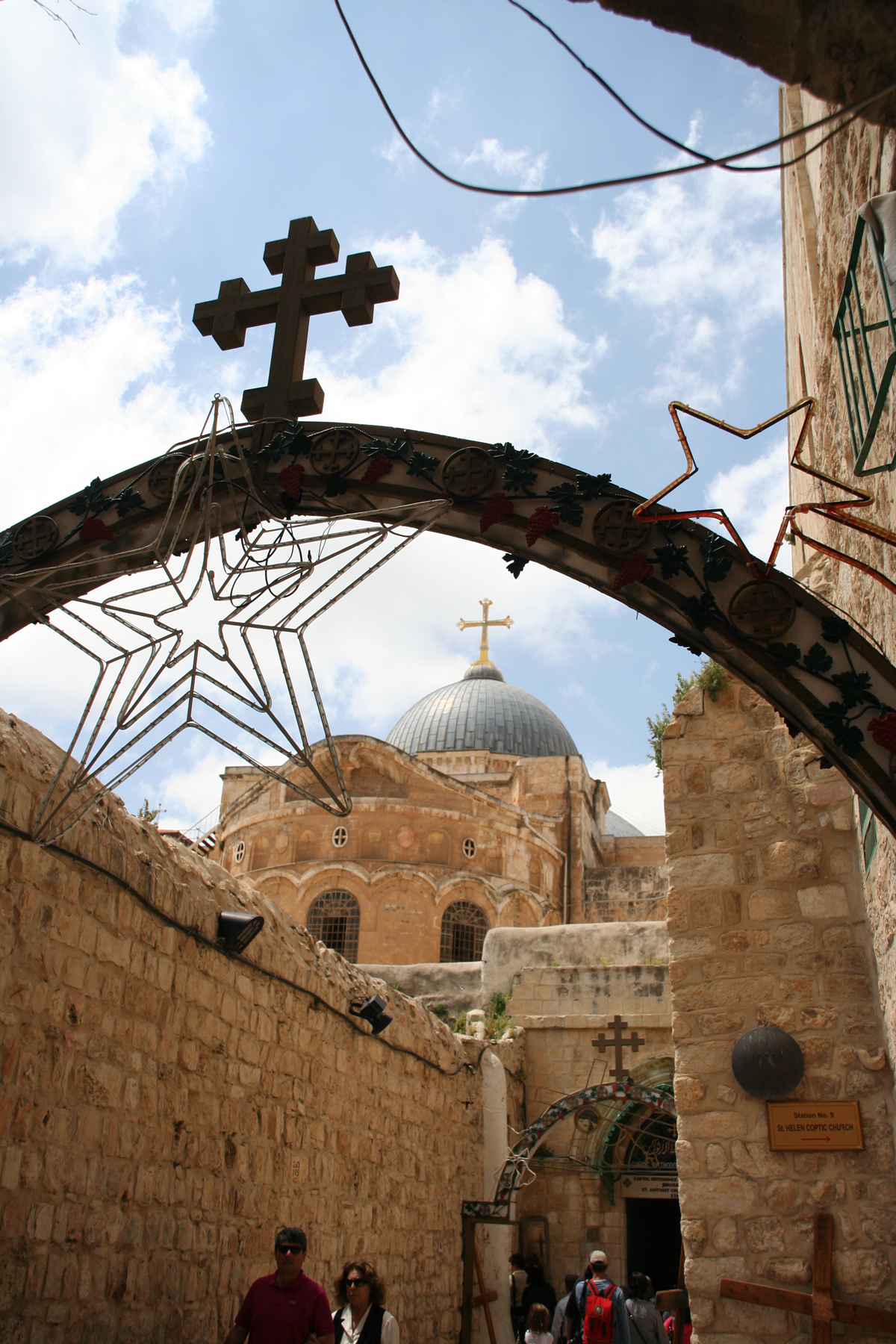
Old Jerusaleum crosses
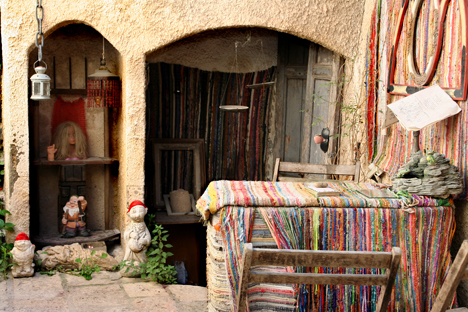
Old Jaffa entryway
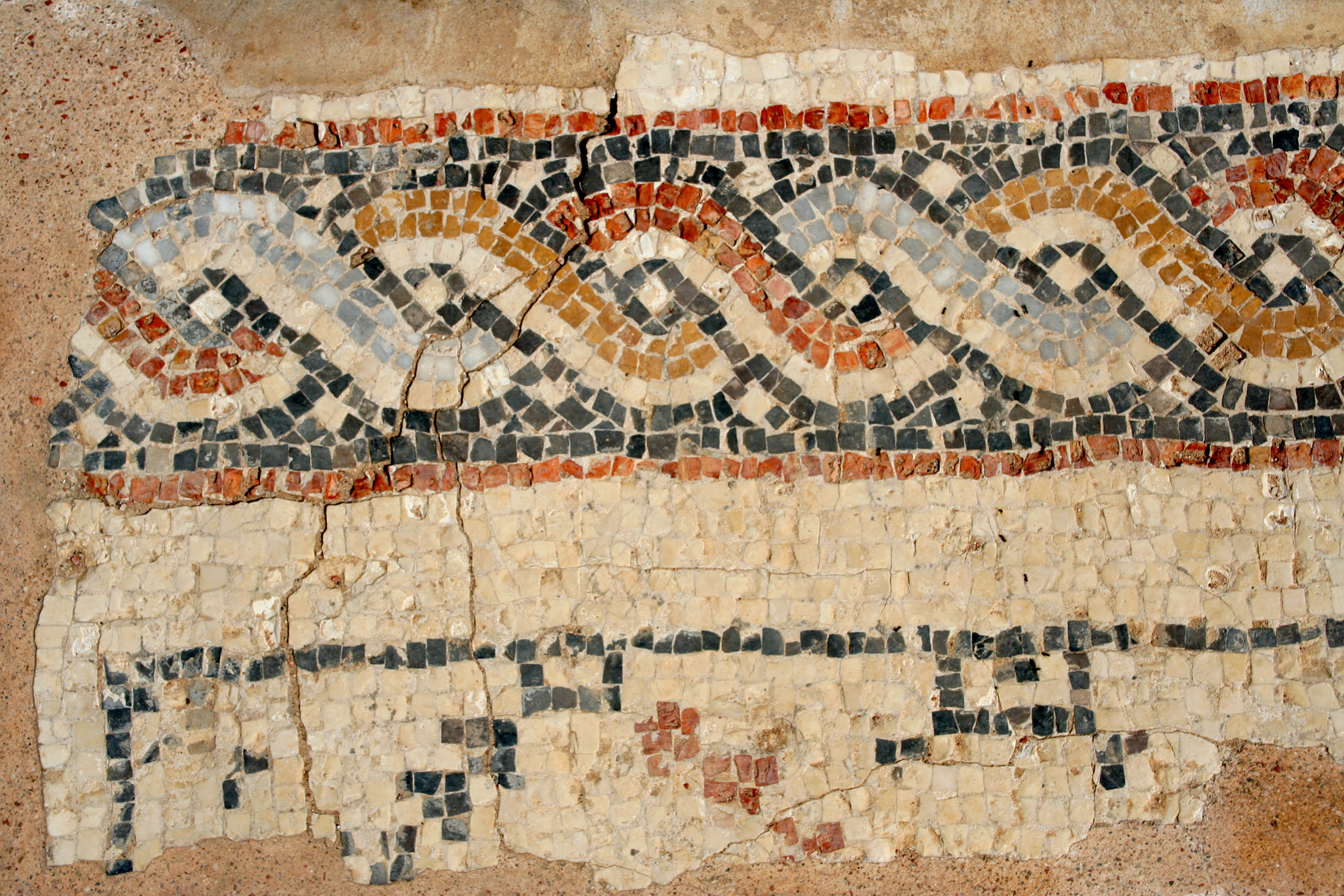
Mosaic
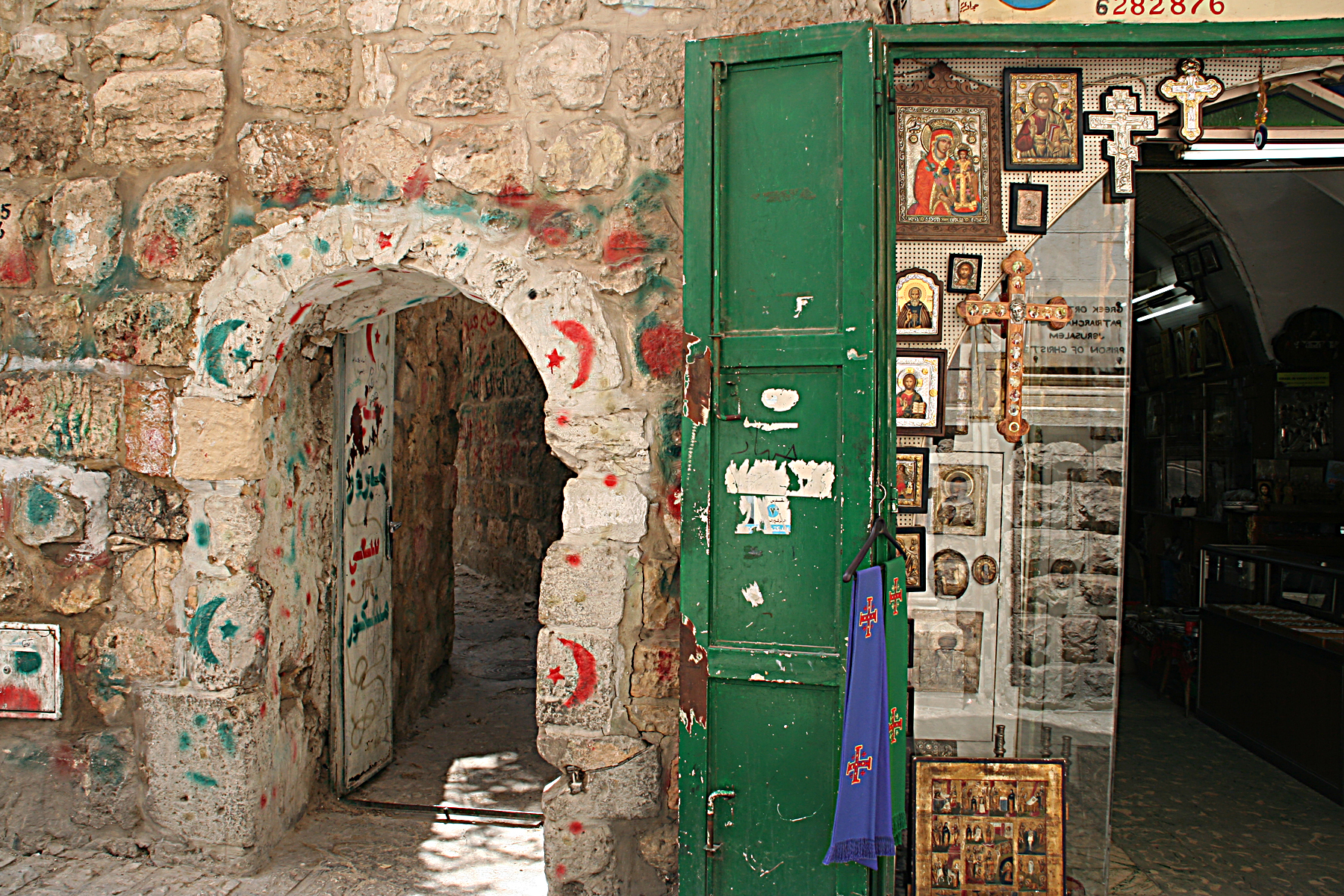
Old Jerusaleum religious icons
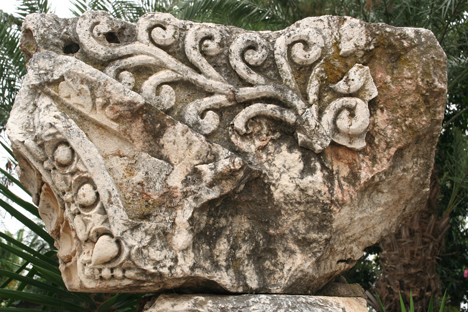
Roman capital in Caesarea
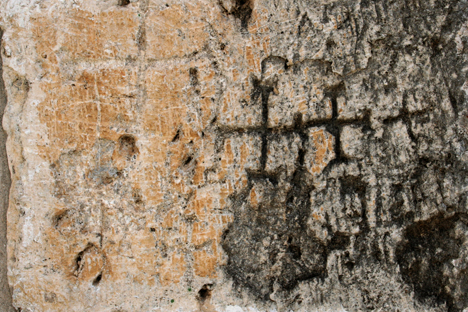
Old Jerusaleum African cross graffiti
I visited Israel recently and saw layer upon layer of many different civilizations and religions that inhabited the land. While there I explored Tell Dan in northern Israel and also climbed the tell at Beit She’an to view the excavations below. Archaeology has always been interesting to me.
Beit [...]]]>
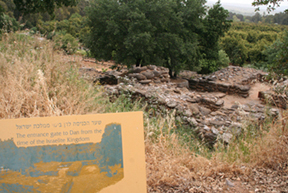
Tell Dan
I visited Israel recently and saw layer upon layer of many different civilizations and religions that inhabited the land. While there I explored Tell Dan in northern Israel and also climbed the tell at Beit She’an to view the excavations below. Archaeology has always been interesting to me.
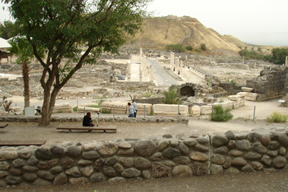
Beit She'an with tell in background
A perfect accompaniment on the trip was The Source by James Michener. It’s a fictitious historical novel about Tell Makor in northern Israel, where archaeologists dig through multiple layers of the tell or mound and uncover 10,000 years of civilization. Each layer in the tell unearths artifacts from a previous period in time, and the story then reverts back to that time.
What is particularly interesting in The Source is the evolution of religion and “god”. It starts with Stone Age man and the first glimpses of spirituality; then proceeds with the fertility goddess Astarte and the fertility god/s Baal, describing in detail the various sacrifices and monoliths. The Cananite deity El eventually evolved into El Shaddai, and then into Yahweh (YHWH), the Hebrew god of Moses and possibly his ancestors. Monotheism (one god) starkly contrasted with the polytheistic (multiple gods) of the Greeks and Romans in later years.
One of my Arborglyph monoprints is called All Seeing Yahweh. For many Jewish people, the name Yahweh should never be spoken. Therefore, the Tetragrammaton or four letters YHWH often replaces the name Yahweh. However it’s possible that:
Hebrew scripts write it as four consonants, rendered in Roman letters as YHWH, due to the fact that most alphabets, prior the Greek alphabet, did not display vowels, and required that vowels be mentally pronounced in the proper places.
And although the name Yahweh should not be spoken, the Jewish Encyclopedia states that The Old Testament had 6,823 references to Yahweh.
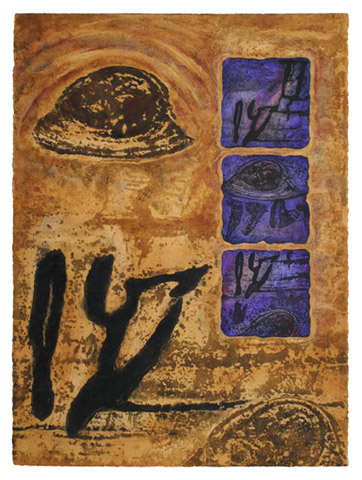
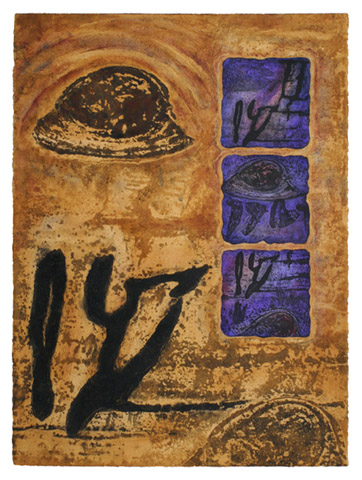
Arborglyph: (1 symbol IY) All Seeing Yahweh © 2005. Linda C. Everson. All rights reserved.
Yahweh was a strong, demanding ‘god’ to the Hebrews. The meaning of the word Yahweh has been interpreted as “to be”, or according to WordIQ many scholars believe it means “He Brings into Existence Whatever Exists”. This coincides with a timelessness about ‘gods’ existence. Which gets back to the novel The Source and its prevailing theme of many gods and religions throughout the centuries in Israel.
My Arborglyph monoprint, All Seeing Yahweh has several images with an IY symbol and also contains several ‘tree eyes’; hence the All Seeing title. The “all-seeing eye” has been associated with several other religions or cultures… The “Eye of Horus” in Egypt, the “Eye of the World” in Buddhism and the Christian Trinity.
The “all-seeing eye of God” is also analagous to the “Eye of Providence” which generally depicts an eye that is sometimes surrounded by a triangle. This “Eye of Providence” is on the Great Seal of the United States and is also a Free Masonry symbol. The eye icon is a powerful image in many cultures and in countless artworks.
]]>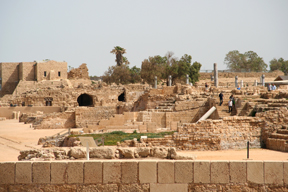
Caesarea
On the coast I visited the port city of Caesarea, where the great Roman architect Herod built 2 harbors, an aqueduct, a Roman amphitheatre, marvelous temples and markets in 30 BCE.
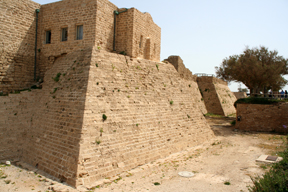
Crusaders Castle
Layers of other cultures and invaders show in the remnants of a Crusaders Castle (1101 – 1265) in Caesarea.
In the Old City of Acre I saw the Citadel and then went underground into the “belly”of the Crusader city where I experienced the Knights Halls with it’s monsterous pillars, arches, crypts, and the Templar’s Tunnel. Above ground (or above our heads) stands the Muslim quarter and markets with Khan El Qmdan.
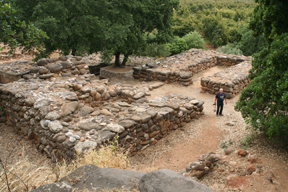
Tell Dan
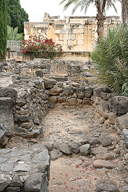
Capernaum
In the Golan Heights, I visited the headwaters of the River Jordan, Tell Dan, and Capernaum where Jesus and Peter lived. Everywhere you saw rocks and more rocks, layers and more layers. Several years ago I did a series of monoprints called Natural Abstractions, and rocks and layers were the major theme.
Nearby in Beit She’an (where only 1/10th of the 400 acre site has been excavated) I marveled as I walked through the Hellenistic and Romanesque baths, pillars, and temples. In the background was a another huge tell (first inhabited in fifth milllennium BCE) with more layers of history to be uncovered, so we naturally climbed the tell to get a better look from above. Looking back at the excavation we could see the signs of a modern industrial city on the top layer.
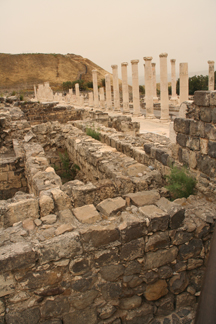
Beit She'an with tell in background
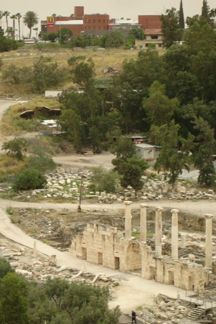
Beit She'an below, modern industry above
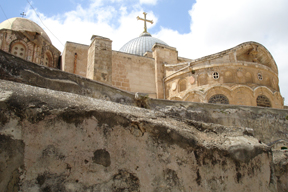
Wall and church above in Jerusaleum
Old Jerusaleum with its four ancient quarters again reiterated the theme of layers. Its impossible to explain in a blog all the buildings throughout history that were built and destroyed, rebuilt and destroyed, in Jerusaleum. One religion ontop of another, anywhere you went. For example, the Church of the Holy Sepulchre was built over the site of a temple of Aphrodite. And the infamous Muslim Dome of the Rock sits ontop of the Temple Mount, which was the site of the Second Temple of the Jews. The rock walls are part of the Western Wall complex that is a sacred site for Jews. Temple Mount is the most contested religious site in world. Trying to keep track of what was where when was very difficult.

Western Wall Tunnels
One of the highlights of the area was the Western Wall Tunnels Tour which opened recently.
Israel is a land of layers, one civilization built on top of another. Visiting Israel shows you the story… a modern and ancient land in one. I was above ground, under ground in tunnels and caverns and cisterns, and everywhere in between.
An excellant book to read about Israel and its layers of civilization is The Source by James Michener. Most of the sites that I saw were in the book, and seeing them made the story more visual. Read my blog about the book and its relevance to some of my artwork.
]]>How does this story about architecture relate to me and my experiences in life? Like Tom the Builder and Jack, my father, grandfather and many uncles were builders. They built everything! Commercial buildings, houses, furniture, cabinets, outdoor sculptures, and extravagent bird houses. Building is part of my roots!
In college, I had to take art history classes where I studied Romanesque churches, Gothic cathedrals, flying buttresses, cornices, naves, and so on. At the time I found it a bit mundane. Since then I’ve been fortunate to travel to Europe, and now find that those classes were very valuable when visiting various architectural sites. As I read the novel, I found myself intrigued by all the building practices of the time.
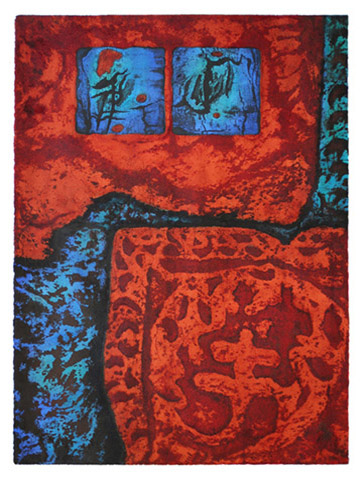 Although I’m not a builder, I now have a penchant for photographing ancient walls. While in Andalusia, Spain, I toured lots of Moorish architecture and photographed the walls and crumbling arabesque ornamentation. Those images were used as background textures in my Arborglyph and Arabesque monoprint series. I worked on this series for an exhibit in Kuwait in 2007.
Calligraphy is an important art form there. My Arborglyphs (calligraphy-like glyphs that have NO particular meaning) provide a visual link between cultures.
Arborglyphs and Arabesque: (2 symbols 1, 3) Ancient Rust Walls
© 2007 Linda C. Everson, All Right Reserved.
]]>I was traveling in Israel recently and couldn’t resist a photo of myself with the lovely hanging tree in the art quarters of Old Jaffa. This hanging tree could have many interpretations and is quite an inspiration. Margaret Mead said in 1978
“EARTH DAY is the first holy day which transcends all national borders, yet preserves all geographical integrities, spans mountains and oceans and time belts, and yet brings people all over the world into one resonating accord…
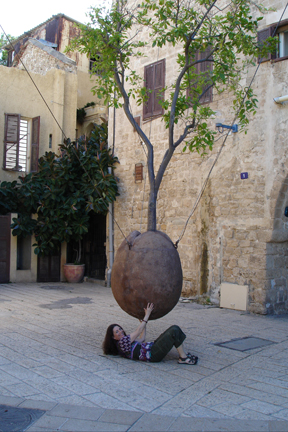
Respecting Mother Earth “rests in all our hands”.
]]>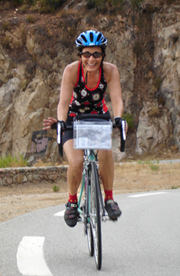
- Linda biking in Corsica
One of my favorite past times is BIKING. I’m no racer like Lance Armstrong in the Tour de France, but I have done several difficult bike tours overseas and love climbing the Colorado mountains. When I’m not riding with others , I sometimes bring my camera and take photos that I might use for imagery in my monoprints. I will shoot photos of the aspen tree bark markings for my Arborglyph monoprint series, or capture interesting textures for backgrounds. I actually have a whole series of images of the cracking asphalt repairs on the roads.
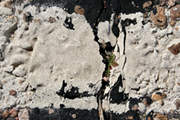
Road repairs can be interesting textures
When you’re biking, you get a birds eye view of the road beneath you and much of my art is about that viewpoint. People have often commented that some of my ‘Arborglyphs’ look like aerial maps or caving/spelunking maps. Its amazing what inspires us artists!
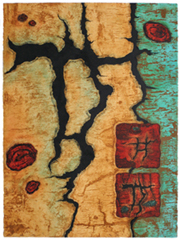
Reminiscent of a spelunking map?
Arborglyph: (1 symbol S2) Sharp on Ochre Bark
© 2006 Linda C. Everson, All Rights Reserved.
I was very interested in learning some new photo printmaking techniques for my monoprints, and wanted a printing plate that was cheaper to use than the solarplates that I’ve been using. Behold, I not only learned photo techniques, but tons of other dynamic ways to creat imagery on the ImagOn film which we adhered to PEGT plexi plates. I was also pleased to find out that I could easily cut these plates into shapes, which I already do with my solarplates. Keith Howard uses Akua inks, which are water based inks. They’re less toxic, dry quickly, and clean up easily without solvents!
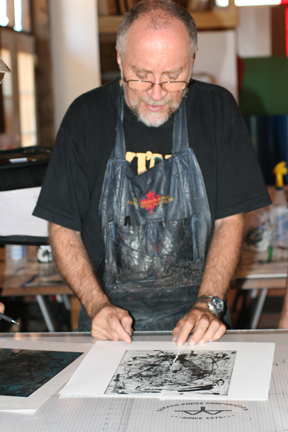
Keith Howard demo
Sanctuary in Chimayo